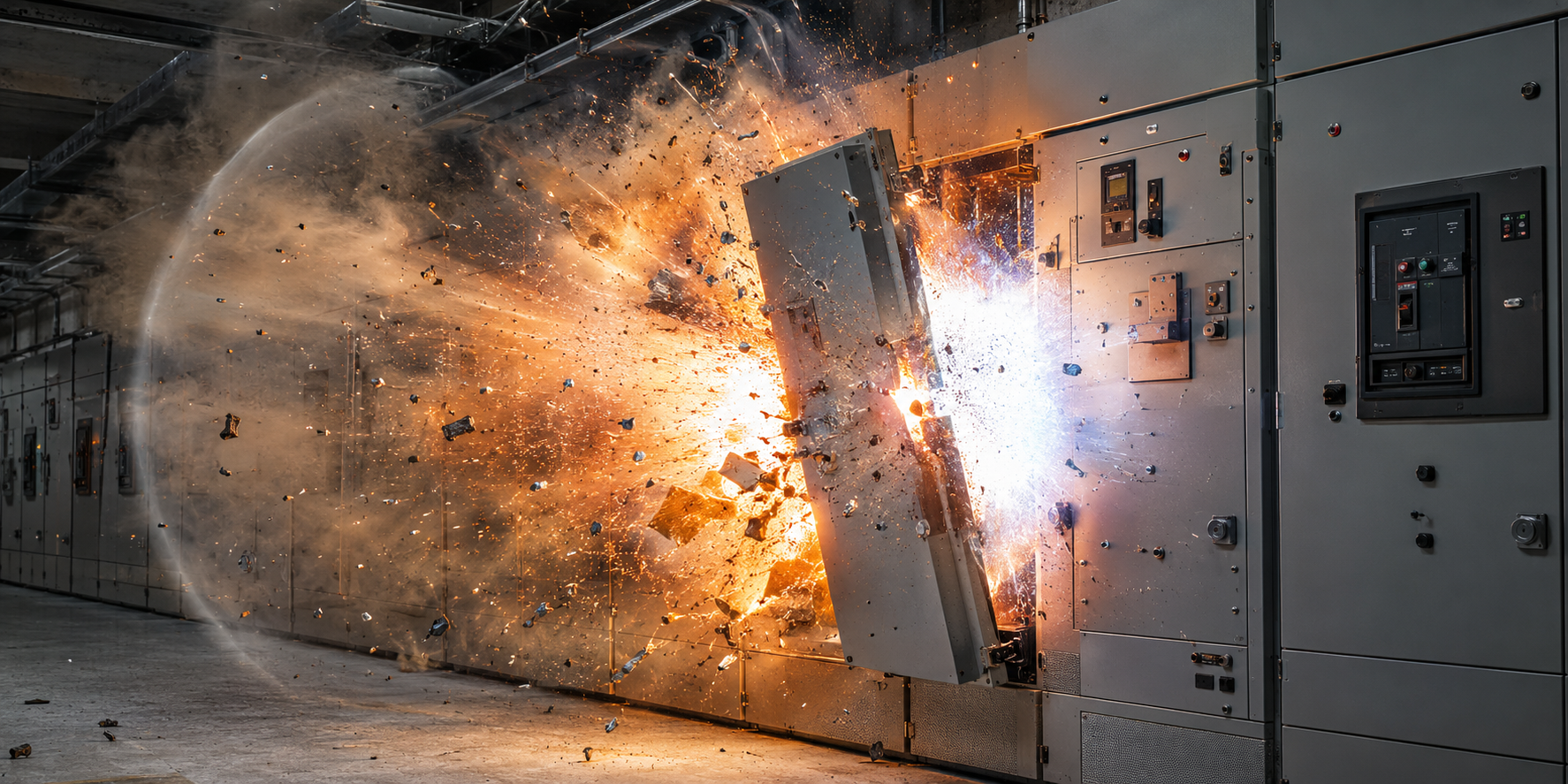
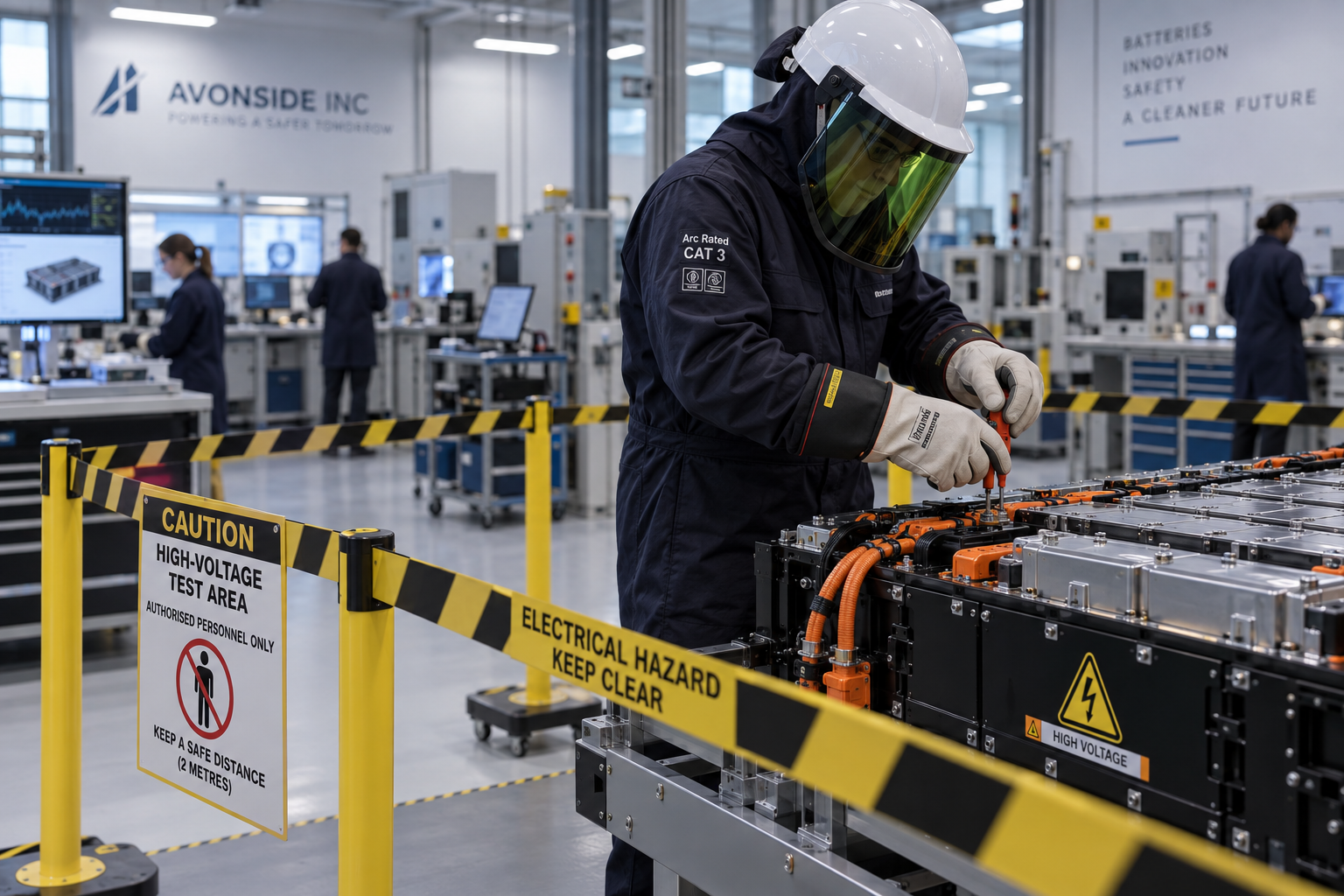

Electrical safety in motorsport concerns the control of shock, short-circuit, stored-energy, and thermal hazards throughout vehicle development and operation. Formula 1, Formula E, WEC prototypes, and INDYCAR provide different examples of electrical propulsion or energy recovery systems that require system-specific assessment.
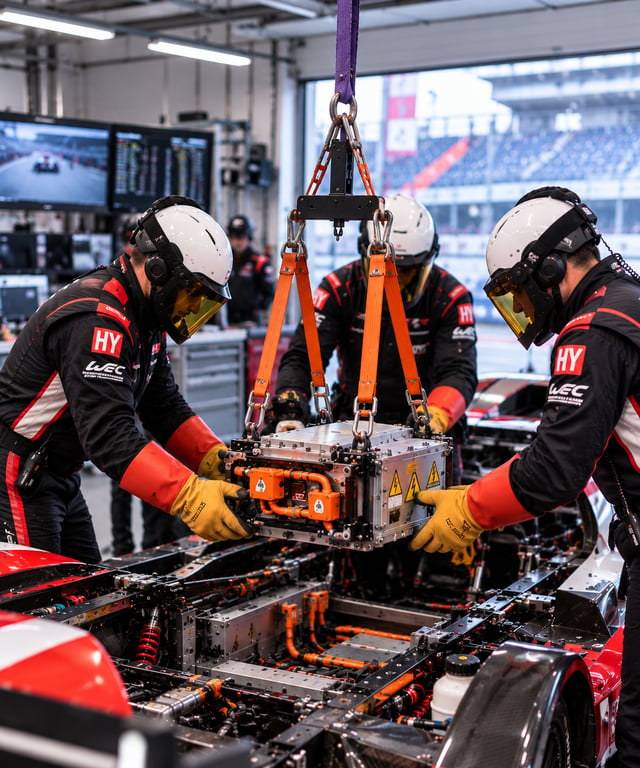
Compressed repair windows and changing configurations make the work activity as important as the technology. Avonside Inc provides tailored electrical safety training for organisations working with electrification systems. In motorsport, effective controls depend on the actual circuit, its condition, and the personnel authorised to undertake the task.
Key Takeaways: Electrical Safety in High-Energy Motorsport
- Voltage, stored energy, available fault current, and equipment condition require separate consideration when assessing electrical hazards in motorsport.
- Compressed repair windows, concurrent tasks, and crew handovers require documented electrical status and clearly allocated responsibility for isolation.
- Prototype changes require review of the affected risk assessment before testing or work proceeds on the revised electrical configuration.
- Avonside Inc provides tailored electrical safety training that connects personnel competence to specific vehicle systems, responsibilities, and work activities.
- FIA, IMSA, and INDYCAR frameworks differ; competition requirements operate alongside applicable workplace safety duties rather than replacing them.
Electrical Hazards in High-Energy Motorsport Systems
Electrical risk depends on voltage, stored energy, available fault current, and system condition. High propulsion power alone does not establish the shock risk or incident energy level associated with a maintenance task.
Voltage and Stored Energy
High-voltage battery systems require controls against direct contact and faults that expose accessible conductive parts to hazardous voltage. Lower-voltage systems still require assessment of short-circuit, heating, and stored-energy hazards.
Disconnecting the propulsion circuit does not remove the energy inside a battery or capacitor assembly. The assessment should distinguish isolated external circuits, residual charge in connected components, and energy retained within the storage system.
Fault Current and Equipment Condition
Available fault current, protective-device response, working distance, and circuit characteristics influence the consequences of a fault. An arc flash assessment needs a method appropriate to the equipment; AC models and assigned PPE categories cannot automatically be transferred to DC battery or capacitor systems.
Water ingress, vibration, damaged connectors, and compromised insulation can change the hazard profile. Post-incident assessment therefore requires attention to the actual vehicle condition, not reliance on its pre-event inspection.
Fast-Paced Motorsport Operations Increase Electrical Exposure
Time pressure increases the opportunity for incomplete isolation, misunderstood system status, and conflicting work activities. Controls need to remain workable during a race weekend without allowing competitive urgency to override safety-critical verification.
Repair Windows and Concurrent Garage Tasks
A diagnostic activity may require energisation while other personnel are working on adjacent mechanical systems. Task planning should define who controls energisation, who may enter the affected area, and which activities cannot proceed concurrently.
A documented safety management system can establish isolation responsibilities, access controls, and escalation arrangements before the repair window begins.
Handovers and Authority to Stop Work
Endurance racing introduces crew rotations and prolonged working periods. Handover records should identify the vehicle configuration, isolation status, outstanding faults, and person responsible for the next energisation. Personnel need a clear route to stop work when system status is uncertain or a control has failed.
Prototype Development Requires Configuration-Specific Risk Assessment
Prototype development changes the evidence on which electrical controls are based. An assessment for one configuration cannot be assumed to cover revised hardware, software, or test arrangements.
Design Changes and Test Rigs
Changes to energy storage, cable routing, cooling, protection settings, or battery-management functions should trigger review of the affected hazards. Temporary connections, exposed terminals, and incomplete enclosures require test-rig-specific controls rather than procedures written solely for the assembled race car.
Avonside's EV training covers development, testing, and validation environments, allowing training needs to be related to the actual engineering activity.
Software-Controlled Energisation
Where diagnostic commands or control software can initiate energisation, the isolation arrangement needs to prevent unintended activation. Software interlocks and status displays support the safe system of work; they do not replace controlled isolation and verification at the point of work.
An electronic permit-to-work system can support documentation and authorisation. The physical controls and verification remain necessary regardless of how the permit is recorded.
Electrical Safety Examples Across Major Racing Series
Major racing series illustrate different electrical architectures and regulatory responsibilities. Applying the same controls to every race car overlooks important differences in storage technology, vehicle condition, and work activity.
Formula 1 Hybrid Energy Recovery Systems
Formula 1 combines internal combustion propulsion with high-voltage electrical energy recovery and storage under FIA regulations. Garage operations need to account for the energy store, power electronics, and electrical status of the car during diagnosis and repair.
The FIA e-safety framework addresses event preparation, responsibilities, briefings, safety-status information, recovery, and quarantine. Its guidance complements the applicable regulations rather than replacing them.
WEC Prototypes and IMSA LMDh Requirements
The FIA World Endurance Championship operates under FIA requirements, while IMSA competition has its own sporting and technical requirements. Their shared LMDh hybrid platform illustrates technical convergence through the ACO/IMSA framework and eligibility across both championships.
WEC Hypercar entries are not electrically identical. LMDh uses a common hybrid architecture, while LMH permits different configurations, including non-hybrid cars. Personnel should identify the actual vehicle before selecting electrical controls. Endurance operations add handover and fatigue considerations.
Formula E Electric Powertrains and Charging
Formula E is a battery-electric FIA championship. Electrical safety extends beyond the car to charging equipment, connectors, supplies, and operating interfaces. Charging requires its own assessment of access, connection integrity, equipment condition, and emergency response.
Damaged-vehicle recovery requires coordination with the designated electrical safety personnel. Isolation of external circuits does not resolve every battery hazard; damaged energy storage can require controlled quarantine and continued monitoring under the applicable event procedures.
INDYCAR Low-Voltage Hybrid Energy Storage
INDYCAR uses a low-voltage, supercapacitor-based hybrid system and its own rulebook, rather than operating as an FIA- or IMSA-regulated championship. It provides a useful contrast to high-voltage battery-electric systems.
Lower voltage does not eliminate stored-energy, short-circuit, or heating hazards. Controls should reflect the supercapacitor discharge characteristics and actual task. Arc flash severity cannot be inferred from a headline current rating alone.
Risk-Based Controls for Garages, Testing, and Recovery
Risk-based controls prioritise elimination of electrical exposure where practicable, followed by engineering controls, controlled work arrangements, and task-specific protective equipment. Energised diagnosis requires separate justification and controls under the applicable legal and organisational requirements.
Controlled Isolation and Verification
For work requiring dead circuits, the approved procedure must address all relevant supplies, prevent unintended reconnection, account for residual energy, and verify absence of hazardous voltage at the point of work. Suitable test equipment needs verification before and after use in accordance with that procedure.
External isolation does not make battery internals safe to contact. Internal battery work requires its own assessment, competence, and controls.
Competence, Access, and Protective Equipment
Avonside provides motorsport EV training focused on race-car hazards, power-down, electrical status, recovery, and safety responsibilities. Course completion supports competence development; organisations still need to authorise personnel for defined tasks and systems.
Authorised person training addresses isolation, proving dead, safety documentation, and handovers. Access restrictions should reflect the task assessment and distinguish authorised electrical work from general garage activity.
Insulating gloves must be selected for the relevant voltage and use conditions. Arc-rated clothing and face shields must match the assessed incident energy level or a valid assigned PPE category. Protective equipment also requires inspection, maintenance, appropriate replacement, and training in its limitations.
Emergency Coordination and Recovery
Electrical incident arrangements should identify the technical decision-maker and coordinate rescue, medical response, recovery, and quarantine. Personnel should follow the event-specific procedure where vehicle status is unknown, rather than improvising contact or recovery methods.
Electrical Safety Management Across the Vehicle Lifecycle
Electrical safety management continues through design, assembly, testing, racing, repair, and decommissioning. Each phase changes the equipment configuration, exposed personnel, or work activity.
Avonside's informed person training covers hazard recognition, permitted tasks, warning signs, access, and emergency procedures. Higher-responsibility roles require competence matched to their isolation, diagnostic, or supervisory duties.
Practical, data-led assessment produces clear controls for the actual system and task. Reviewing modifications, inspecting equipment, maintaining records, and rehearsing emergency arrangements enables proportionate protection without assuming that competition compliance alone addresses every workplace hazard.
FAQs About Electrical Safety in Motorsport
Why does low-voltage motorsport equipment still require risk assessment?
Low-voltage equipment can retain substantial energy and deliver damaging short-circuit currents. Assessment needs to consider discharge behaviour, protective devices, equipment condition, and the task. Voltage alone cannot establish the thermal hazard or determine appropriate protective equipment.
Does isolation require discharging the entire traction battery?
Not for every task. Approved isolation procedures address the circuits being worked on and verify their electrical state. Energy remains inside the battery, so internal work requires separate controls. Avonside's training addresses the distinction between isolated powertrain work and battery-system activities.
How should prototype modifications affect electrical safety controls?
Modifications should trigger review of the affected risk assessment before work or testing proceeds. Hardware, software, and temporary connections can change exposure or protection. Avonside provides tailored training for development and testing environments to support task-specific competence.
Do competition rules replace workplace electrical safety duties?
No. FIA, IMSA, or INDYCAR requirements apply within their respective competition frameworks, alongside applicable workplace law. Organisations remain responsible for safe work arrangements and personnel competence. Avonside's tailored training supports those arrangements without replacing system-specific assessment or employer authorisation.